So Why Do We Keep Treating People With Disabilities the Same?
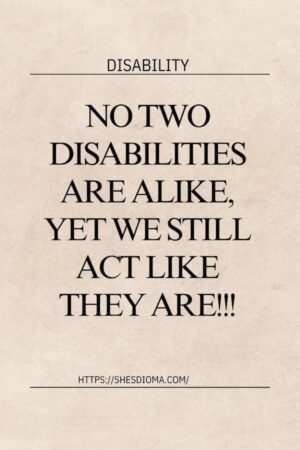
No two disabilities are alike. So why is it that people often have the tendency to categorize every disabled person as a carbon copy of each other? I would really love for someone to explain that to me.
The issue is that as soon as there is a prognosis that hones in on a certain condition. The mind then automatically imagines the worst-case scenario. Instantly, the focus goes straight to how limited the condition might be, without giving the disabled individual the opportunity to demonstrate what they’re truly capable of.
Click Here To Read: Asking for More Don’t Make People With Disabilities a Burden
Why a Prognosis Can Be Misled
The ironic thing is that, on paper, the diagnosis could read as: “The person has paralysis in all four extremities, which impacts her movements. Her speech is also affected.” That is just one example. I’m no doctor, nor do I have any intentions of ever becoming one. Simply, I’m speaking from personal experience.
What I have learned is how deceiving the medical language can be. Typically, it commonly overlook the person behind the symptoms.
Upon reading a prognosis like the one above, our mind, by default, draws the most negative outcome. A large number of close-minded individuals could easily conclude that a disabled person is unable to attend to or look after themselves. This assumption is base on paralysis affecting both of their legs and arms. And how can they communicate if their speech is also impacted? “Oh poor thing!”
That is the reaction many would have after reading something as such. Immediately, the person with a disability is placed in a box. Obviously, they don’t have business being there. Soon, they are labeled as helpless and incapable. Eventually, robbing them of the chance to demonstrate their abilities.
People With Disabilities Are More Than Their Condition
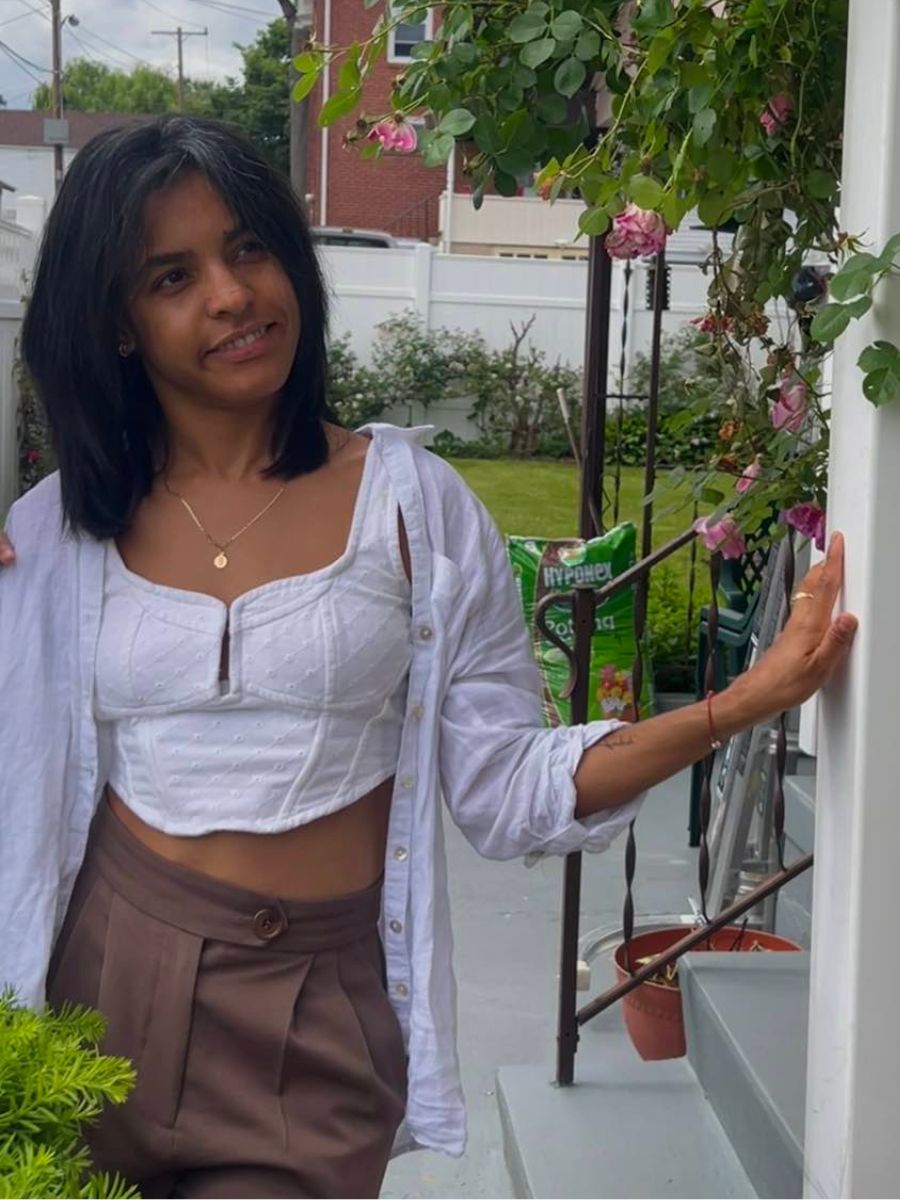
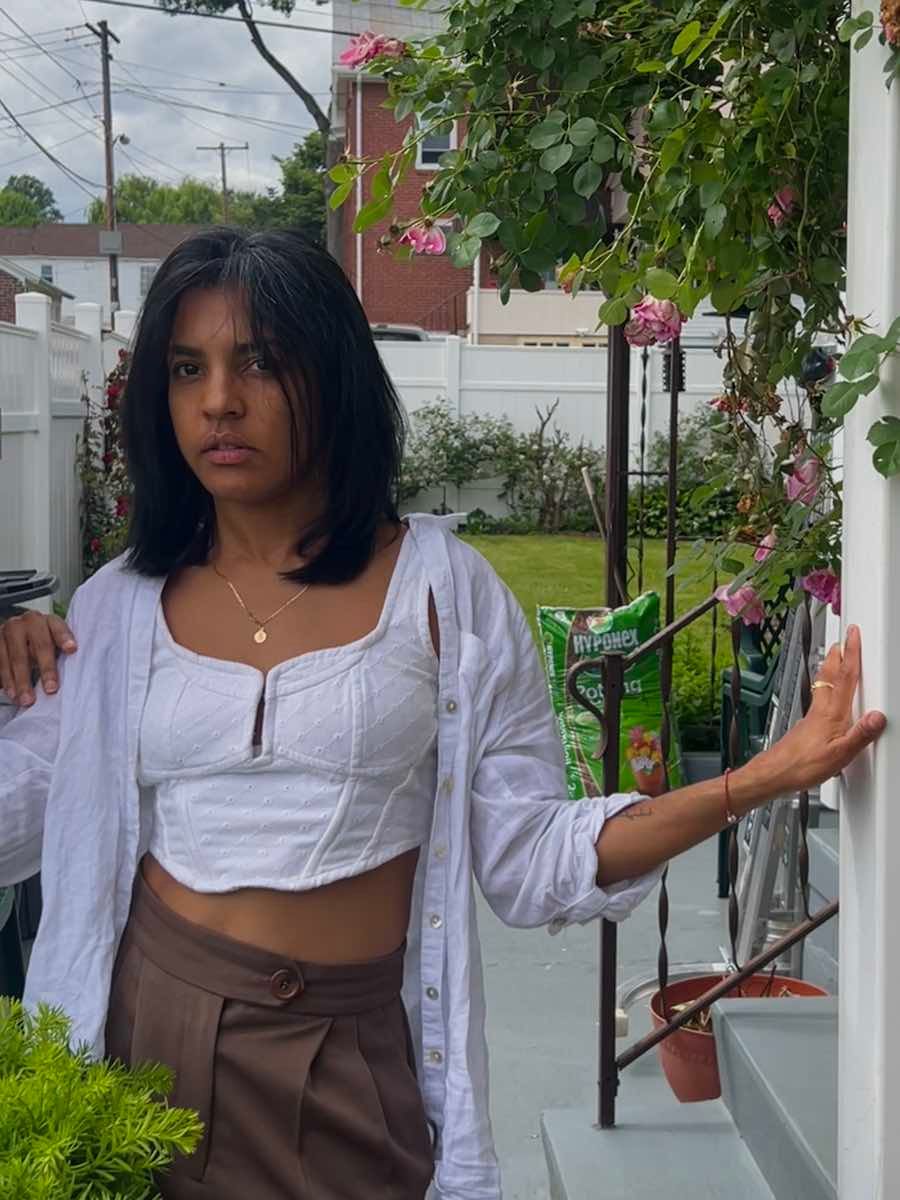
And why is that a problem? It’s a problem because not all people with disabilities are helpless beings, unable to look after themselves and in need of being rescued. For instance, I have cerebral palsy (CP), which impacts how I do things. It mainly affecting the right side of my body. My speech is also impacted; I can speak, but my words aren’t always as clear as I would like them to be. Still, that doesn’t mean I’m incapable of doing everything an able-bodied person would. I live a very regular and active life, despite my limitations. Also, I’m surrounded by an incredible support system of family and friends. The gym and working out are my sanctuary and I try to do it four to five times a week. Sadly, you wouldn’t know what I’m capable of just by reading the health records.
I’m using myself as an example to show that having a disability might be one thing, but how a person handles it is completely different. Some might view having a disability like this tragic thing. However, you know what is awful? Letting life pass you by because you are too afraid of facing your demons. That’s the worst kind of disability anyone can have.
How Disabled and Able-Bodied Individuals Differ
The unfortunate reality is that many individuals who don’t have disabilities spend their lives wishing they had the means to live life trouble-free. Instead of having the incentive to roll up the hems of their pants and take the initiative to create the opportunities to advance in life.
Whereas a person with disability often has to learn from a young age to fight for what they want while refusing to let labels dictate what they can and cannot do in life. It’s not that the disabled person can’t do it, quite the opposite. It is all about finding alternative ways to accomplish things, which allows people with disabilities to reach their objective successfully.
Aside from objectifying a person with a disability, take the time to understand them and their abilities. Just because a person check all the boxes doesn’t imply that they belong in a specific category.
As a society we ought to learn the true essence behind the phrase “there is more than it meets the eyes.” Just because something appears a certain way it doesn’t mean it’s the right way. Learn to see the beauty in what is different and the value that comes with understanding what you don’t comprehend. The world would be amazed by the great potential people with disabilities can provide when given the chance. Mainly, if people only had the impulse to stopped seeing disabilities as this unfortunate thing. Disabilities should be seen as this beautiful thing, we all could learn and growth from.
Before placing limitations on a disabled person, first take time to understand what lies beneath the surface. You might be surprised by what you will discover. After all, it’s the way we choose to see things that makes them beautiful.
Stay Beautiful XoXo

Find me on: Web